


On every single consult call I ask my couples about what’s currently stressing them out. Obtaining a permit is almost ALWAYS included in their answer! So, I’m writing this blog to ease your fears and pull back the curtain on a frustratingly opaque process.
Why is this so complicated?
Land management is a topic so dry it’s guaranteed to put you to sleep, so I’ll keep it brief. Every land management agency is governed by different rules, for different uses, with different missions. For example, the National Park Service aims to preserve (keep it as untouched and natural as possible). The Bureau of Land Management must balance multiple use mandates (allow for resource extraction like mining in addition to public enjoyment). A state park or city park might have completely different goals.
Within each of those systems there still isn’t a cut and dry process that can be cleanly applied across the board. The permit process is different in Yosemite versus Death Valley, even though they’re both national parks.
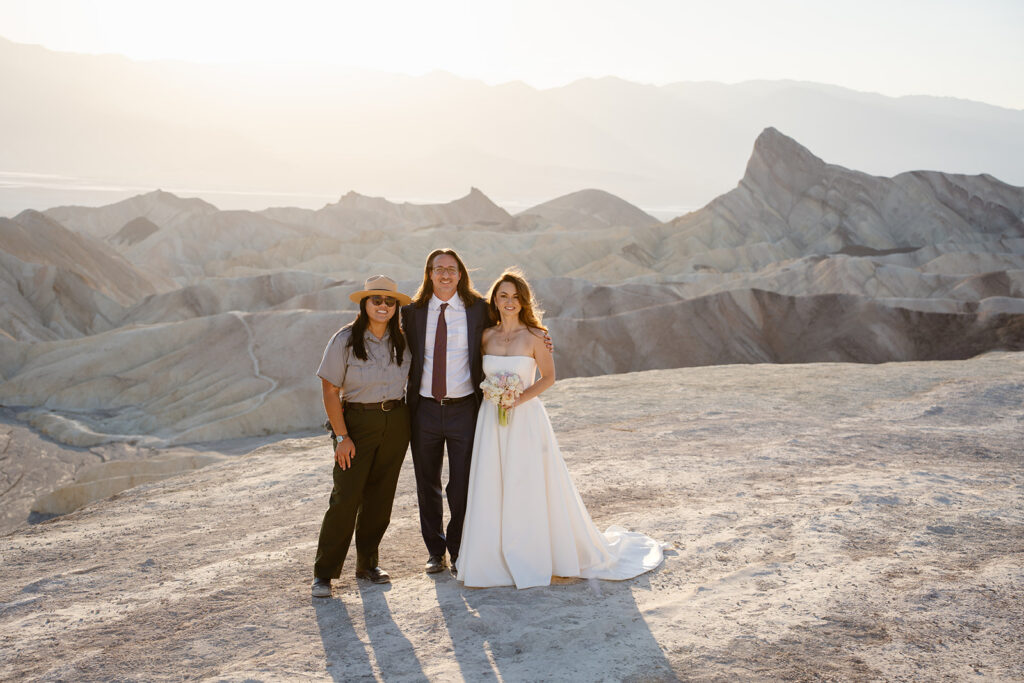
In my experience, land management agencies are not concerned about any legal act of marriage taking place on the land. They are walking a fine line between protecting the resource (nature) and letting the public use and enjoy the land according to their specific mission and rules.
Do I need a permit to elope?
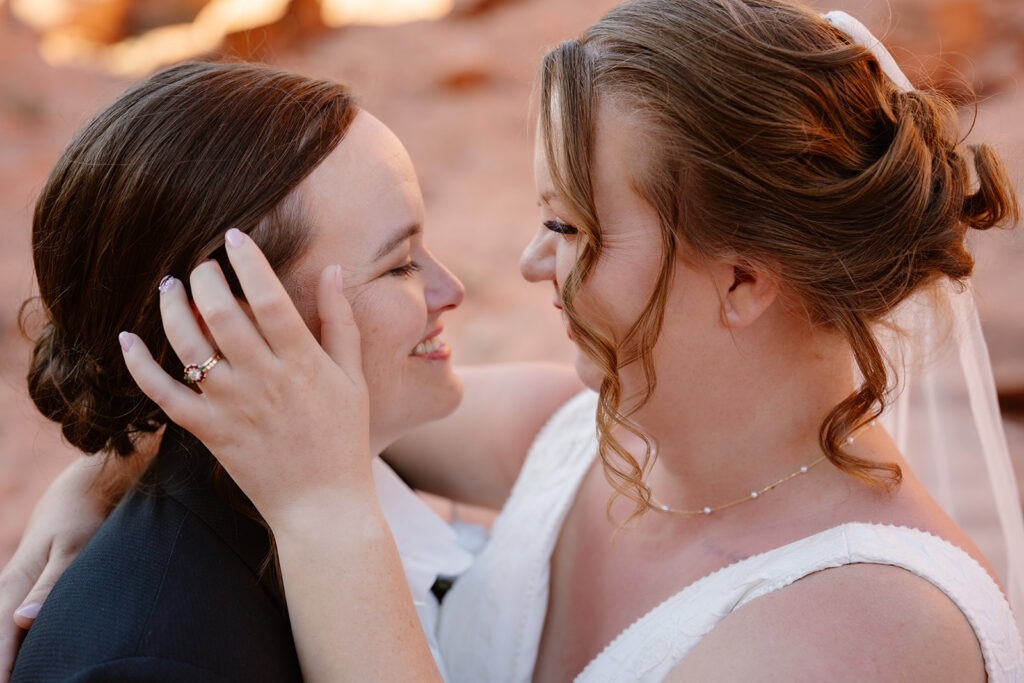
Assume that you do, then double check. In my experience, many city parks, state parks, national parks, national forests, and BLM-managed lands require some form of authorization for a wedding, elopement, or commitment ceremony. They do not differentiate between weddings and elopements. Yes, this includes vow renewals.
In some cases, you won’t need a permit. Those cases are very cut and dry and are usually clearly spelled out on the agency’s website. The most common type of permit I see required for weddings and elopements is typically called a special use permit.
If there is ANY confusion or gray area about whether or not you need a permit, you should reach out to the land management agency, explain your situation, and get confirmation that you do not need a permit in writing.
Bonus: I help my couples with this step! I am happy to do this research for you, and in most cases I already know the answer.
Then, you should bring that printed email (or screenshot) with you into the park on your elopement day so you’re ready to show it to any ranger who might question your right to be there without a permit.
What could happen if we skip this step?
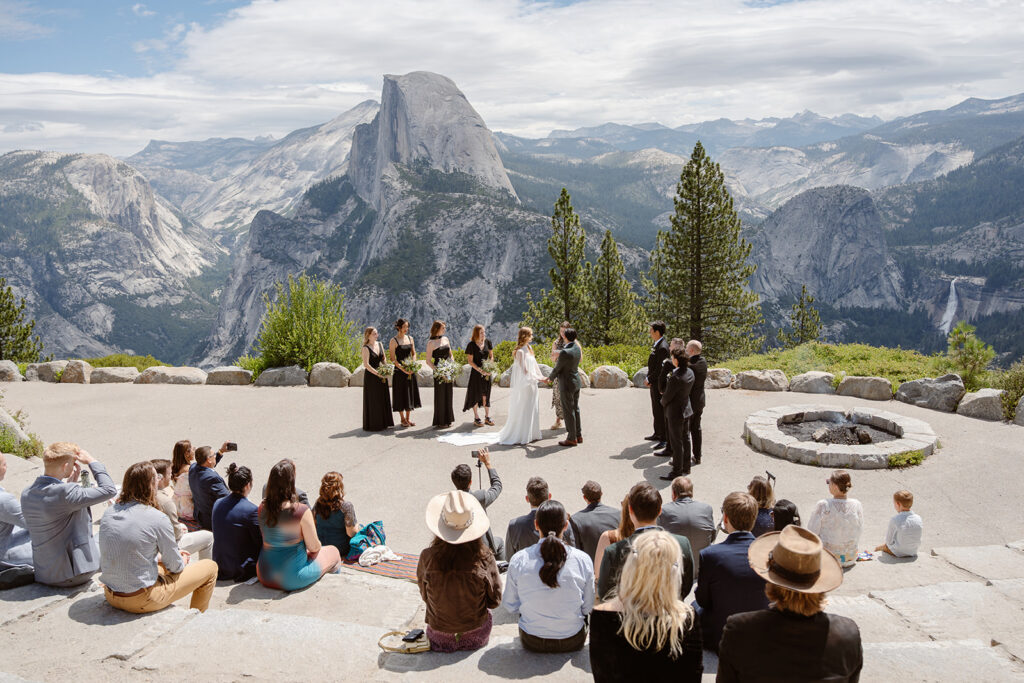
Oh the horror stories I’ve heard. One reason permits are important is that they allow land managers to keep track of scheduled events and manage use of popular areas. Imagine showing up to the gorgeous overlook at sunrise only to see 4 other couples and their families doing the same thing. Permitting spreads out the demand and ensures you’re not competing for space. You want to be able to pull out your permit and show that you have permission to be holding your ceremony there.
However, even having a permit does not necessarily mean you have exclusive use of the surrounding area. National parks are public spaces and we must share the space, even during your ceremony. 99% of the time the general public is respectful when they see a wedding taking place, and everyone keeps their distance.
If you are one of those couples who does NOT have a permit? At minimum, you could be asked to stop the ceremony or leave the area. Depending on the rules you violated, additional consequences could include citations, fines, or restrictions on future use.
Wedding: ruined.
All to avoid a little paperwork. If someone is advising you to skip the permit application process and just cross your fingers, do not hire them.
What information do we need to apply?
Most permit applications ask for some version of the following:
- Your requested wedding date and time
- Your preferred ceremony location
- A backup location or date
- Your expected guest count
- The names and/or roles of vendors
- A description of what you plan to do
- Whether you plan to bring chairs, arches, decorations, or other equipment
- Your contact information
Every agency is different, but this is where I help couples make sure their application is clear and realistic before submitting it.
So what’s the actual process to obtain a permit?
First, I help you confirm if you do or do not need a permit. If not, we obtain confirmation in writing. I’ll do the research (I likely already have this step completed) and let you know the exact steps.
Usually it’s as easy as downloading a form, filling it out, and either emailing it or printing and physically mailing it in. Most agencies require a nonrefundable application fee that can range from $100-$700. Sometimes payment is included with the application, other times the agency will get in touch with you after your application is received to let you know how to pay that fee.
I also provide my couples with permit application tips that are specific to their ceremony location to minimize the back and forth that can arise with the land management agency if your application is not clear enough.
Once your application is approved, the agency will let you know what has been authorized, including your ceremony location, time slot, and any conditions attached to the permit. It’s at THIS point that we can confidently lock in tentative timelines and you can share the time and location with any guests or other vendors.
Eventually they will send you a copy of the permit for your signature. Once you receive a copy of the fully executed permit (that includes THEIR signature), you should print it out and bring it with you on your wedding day in case any disputes arise on site.
How long does this take?
Processing timelines vary dramatically. Some locations may require applications at least 30 days in advance, while others require substantially more lead time. I’ve encountered BLM offices that require applications 90 days in advance, which is one reason I recommend starting this process as early as possible.
Many sites will not accept applications more than one year in advance. Meeting the minimum application deadline does not necessarily mean you’ll receive your first-choice location or time.
For competitive ceremony locations like Glacier Point Amphitheater in Yosemite National Park, I recommend submitting your application as soon as possible. Include a backup location that you would still be genuinely happy to receive. If the date is less important to you than the location, the agency will likely be able to work with you to choose a date that has availability.
Do land management agencies ever get it wrong?
Yes. These agencies are usually managing very large areas, understaffed, and trying to adapt to changing laws and policies in real time with little to no guidance. Federal land management agencies in particular recently had their permitting laws overhauled, and it has taken many months for them to update their processes.
Sometimes that can mean being asked for information, fees, insurance, or additional requirements that may not actually apply to your specific type of ceremony.
These instances are rare, but they happen. This is why it’s so beneficial to hire someone with experience who knows the law and will help you navigate it all. While you must be the ones to obtain the special use permit, I am always available to talk through how to respond to the agency.
It’s also helpful to remember that these staffers are underpaid and overworked. They are usually in these jobs because they love the outdoors, and sought a career in public service to protect these special places. Always treat permit office workers with the kindness and respect they deserve.
Do we need anything in addition to the permit?
Obtaining permission for your ceremony and gaining access to the location are sometimes two separate things.
Depending on where you’re getting married, you may also need an entrance reservation, timed entry reservation, parking reservation, camping reservation, or other form of access permit. Your officiant, photographer, or other vendors may also have their own authorization requirements.
Your special use permit does not necessarily replace those requirements.
The good news is that this is exactly why I help my couples research the logistics before their wedding day. The goal is to make sure we’re not just allowed to have your ceremony there, but that we actually have a plan for getting everyone where they need to be.
What if we need to change our plans?
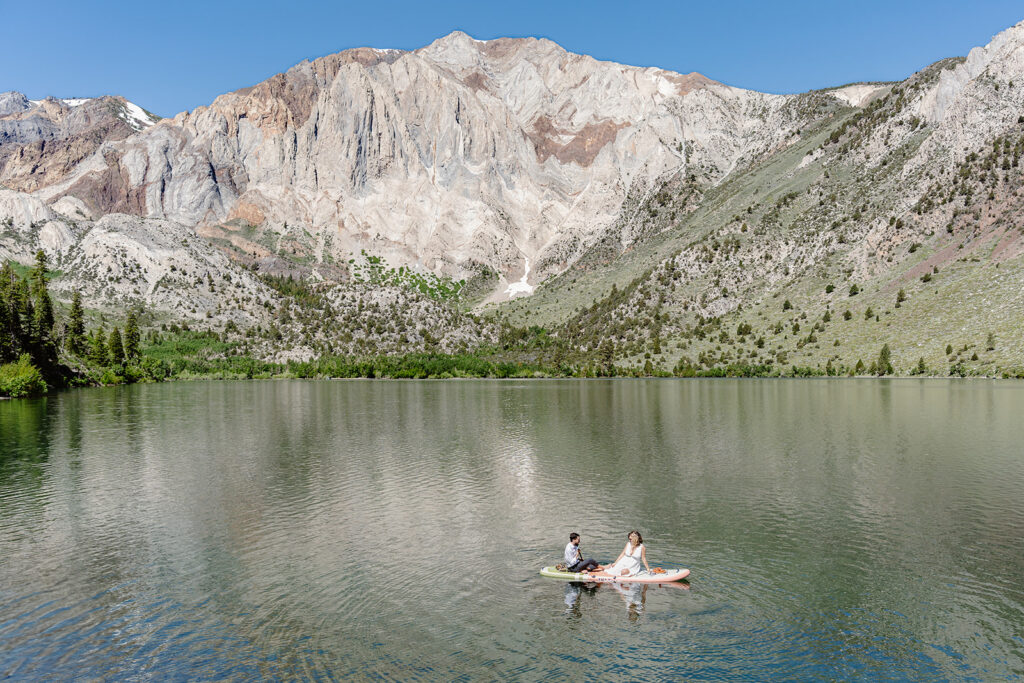
This is one reason I strongly recommend having backup plans before your wedding day (something I help my couples develop in the planning process).
Permits are often issued for a specific date, time, location, group size, and activity. If you decide to make significant changes, you may need approval from the land management agency before simply switching locations or bringing additional guests. If we have enough notice, it can be as easy as emailing the agency and getting their approval to switch.
Weather is a perfect example. If rain, snow, wind, wildfire, or a road closure makes your original plan impossible, you can’t always assume you can just move your ceremony to another beautiful location nearby.
Whenever possible, I encourage couples to think about backup options during the planning process rather than trying to solve the problem while standing in the storm on their wedding day. This might look like going back to your scenic Airbnb or waiting out the lightning at a brewery nearby.
Some locations, like Yosemite National Park, even have a space on the permit application for a back-up location which makes pivoting much easier.
Can we do whatever we want once we have a permit?
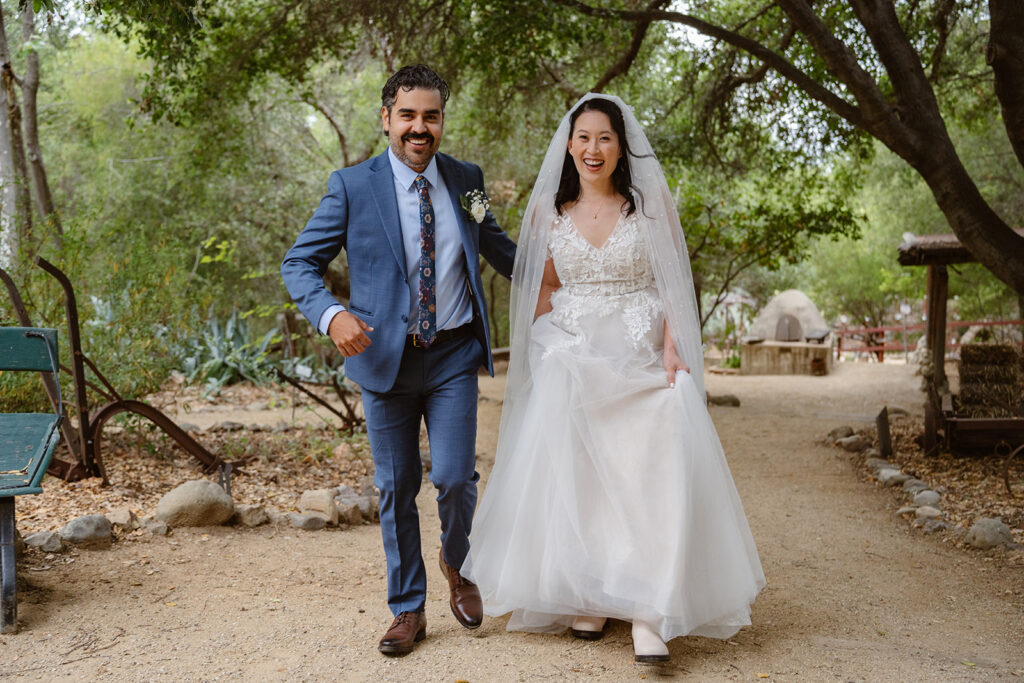
No. A permit grants permission for the activity described in your application. It doesn’t automatically override the area’s existing rules.
Some items that are commonly not allowed at weddings on public lands:
- Chairs
- Arches
- Floral installations
- Confetti or flower petals
- Signs
- Amplified music
- Drones
- Officiants using amplification
- Champagne or alcohol
- Commercial vehicles
- Large groups
This isn’t a universal list, and some of these things may be allowed at certain locations with prior approval. Always check the specific rules for your ceremony site rather than assuming that something is allowed because you’ve seen another couple do it.
Can my photographer get the permit for me?
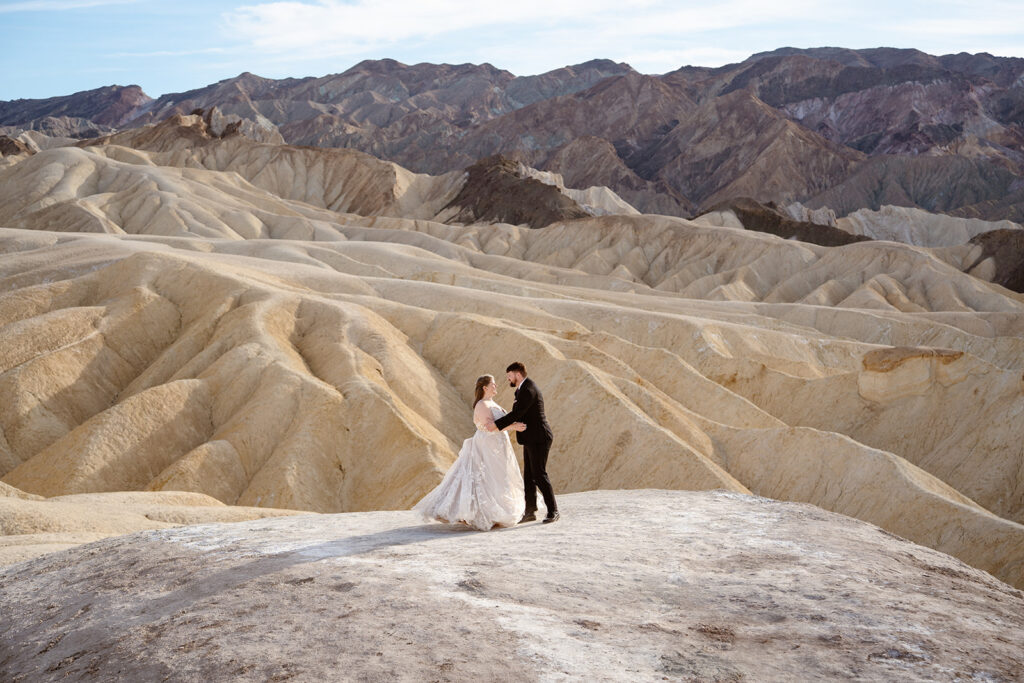
Usually, no. In most cases, the couple themselves must apply for the wedding or special use permit because they are the people requesting permission to hold the event. If a separate photography or commercial-use authorization is required, I handle my own professional permitting.
That doesn’t mean you’re on your own, though. I help my couples determine what they need, understand the application, choose appropriate locations and backup options, and make sure they know exactly what information to provide.
If I need separate authorization to photograph or work professionally in the area, I’ll handle that myself.
Where can I find more planning advice?
Check out how to elope in Yosemite, how to elope in Death Valley, or how to elope in Red Rock Canyon for so much more information.
Want personalized help? Contact me to set up a free planning consultation!


+ COMMENTS